UNICEF has published a report today called:
"Preventing Disease and Saving Resources: the potential contribution of increasing breastfeeding rates in the UK".
UNICEF'S press release states:
"The report findings show that for just five illnesses, moderate increases in breastfeeding would translate into cost savings for the NHS of £40 million and tens of thousands of fewer hospital admissions and GP consultations."
See:
http://www.unicef.org.uk/BabyFriendly/News-and-Research/News/Breastfeeding-could-save-the-NHS-millions/
Here's a quick response from me, Mike Brady, Campaigns and Networking Coordinator at Baby Milk Action:
"This report is very welcome. The finding that babies who are not breastfed are more likely to become ill and require hospital and other medical treatment is neither surprising or new. The big question is will the present Government act when others have failed to do so in the past? Unfortunately, the current administration has taken steps backwards by, for example, scrapping the Infant Feeding Coordinator posts at the Department of Health despite these being one of the initiatives included in the Global Strategy on Infant and Young Child Feeding, which the UK claims to support. Some of the countries that have followed the strategy, including prohibiting the promotion of breastmilk substitutes in line with internationally agreed minimum marketing standards, have seen marked increases in breastfeeding rates, Brazil being a particularly good example. Of course, in parts of the world without the same level of health service support babies who are not breastfed are not only more likely to become ill, but more likely to die.
"Stopping baby milk company promotion has to be part of the public health policy response to this unnecessary illness and suffering. That is not to say that mothers who use formula should be made to feel guilty for doing so. Formula should be available for those who need it and everyone benefits if there is accurate independent information on infant feeding, instead of promotion from baby milk companies with a vested interest in selling their products. Don't forget, the millions companies spend on their promotion campaigns ultimately goes onto the price they charge for formula."
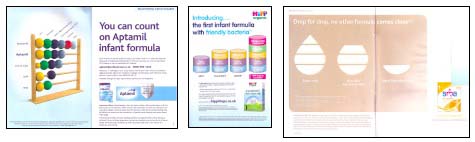
The following advertisements all appeared in the same health worker journal showing how each of the companies claims its formula is closer to breastmilk than the other brands. They cannot all be telling the truth. Unfortunately, the Advertising Standards Authority (ASA) refuses to investigate advertising in health journals. When Baby Milk Action has brought complaints about follow-on formula advertising to the public, the ASA has ruled against the claims that Aptamil and SMA are the best formulas. The claims do not stand up to scrutiny. Baby milk companies have shown they cannot be trusted to provide accurate information to parents or health workers. See:
http://info.babymilkaction.org/cem/cemsep12
The Government has known about the health and financial impact for years of course. For example, in 2006 the
National Institute for Clinical Excellence costed the savings to the NHS from a modest increase in breastfeeding rates (a 10% increase in initiation) and found many thousands of babies would not suffer illness and millions would be saved.
As UNICEF points out, the National Infant Feeding Survey tells us that 90% of mothers who stopped breastfeeding their babies by the time they were 6 weeks old wanted to breastfeed for longer. With greater support, many would have been able to do so, fewer babies would have become sick or even died and there would have been cost savings.
It is not just about support, of course. Breastfeeding is the normal way to feed a child. Denying a child breastmilk and giving it an alternative type of milk, even one processed to the best of current knowledge, is inevitably not going to be as beneficial. Breastmilk is a living substance and is a continuation of the nurture a mother has provided to her child through the placenta.
Formula is sometimes described a fourth best after breastfeeding, the mother's expressed breastmilk and donor breastmilk. Formula can save lives when breastmilk is unavailable either from the mother or donors, but modified cow's milk will always have limitations. In the UK, composition of formula is closely regulated so that those on the market have the ingredients known to be necessary. As scientific knowledge changes, the regulations are updated to change the composition. Mothers who do not breastfeed, or carers without access to breastmilk, can base their choice on their baby's preference and/or cost. Every company tries to claim its formula is better than the other brands, but this is marketing hype designed to inflate prices.
So aside from the short and long-term health impacts, financially the public is suffering a double whammy. As more tax money goes to paying for the care of babies who are not breastfed, parents who use formula are paying over the odds as prices are inflated to pay for the multi-million pound marketing campaigns run by the baby milk companies.
Based on figures from dairy farmers, the proportion of the selling price of formula that goes towards promotion and profit is between 53% and 80%. That means parents who use formula for 12 months are paying anything between about £231 and £884 towards promotion and profit. See:
http://info.babymilkaction.org/news/campaignblog310712
The latest marketing strategy of the baby milk companies is to claim they are friends of breastfeeding, wanting to offer advice and support to mothers. Danone claims that 3,000 mothers are signing up to its Cow & Gate branded baby club every week.
We have seen that companies have ostensibly given up on the first 6 months period, promoting their follow-on milk for use after breastfeeding for six months. This follows campaigns exposing their misleading claims and public health messages about the importance of breastfeeding. But companies ignore the fact that it is
exclusive breastfeeding that is recommended for 6 months, with breastfeeding continuing beyond this age with the introduction of complementary foods. Companies also break the UK
Infant Formula and Follow-on Formula Regulations (2007) and associated
Guidance Notes by using the same brand names for follow-on milks and infant formula for use from birth and making the brand the focus of the advertising. See examples in the Baby Feeding Law Group monitoring project:
http://www.babyfeedinglawgroup.org.uk/reports/bflgreports
Involving baby milk companies in breastfeeding promotion is like putting the fox in charge of the chicken coop. We receive complaints about the outrageous emails mothers have received from companies. For example, Pfizer/Wyeth has promoted its SMA brand in an email headed:
"How is feeding going?". It then plants seeds of doubt about breastfeeding:
"If you’re breastfeeding, do you sometimes wonder if your baby is getting enough milk?"
Although purporting to offer supportive advice, it highlights negatives:
"Feeling sore? .... If the pain continues or your nipples start to crack or bleed...."
Wyeth suggests people contact their midwife or public health nurse,
"or call the SMA Careline".
After all that comes the closing punch:
"Thinking of bottle feeding?" This is accompanied by an advertisement for SMA infant formula (which it is illegal to advertise) and the idealising claim (also prohibited) boasting the formula has
"a new fat blend closer to that of breast milk".
The information that babies fed on the formula are more likely to become sick, be hospitalised and cost the NHS money treat is missing. As is the fact that these email marketing campaigns, the Careline, the cuddly toys, free gifts, free lunches for health workers and so on all go onto the price of formula.

What do parents really need? A free bear from Danone branded with its Aptamil formula name and logo (left) paid for by premiums on the price of formula - or accurate independent information on infant feeding from the health care system, no company promotion and cheaper formula?
Not for nothing are mothers supporting Baby Milk Action's
"No promotion, cheaper formula" campaign. It doesn't matter if they are breastfeeding or using formula.
Everyone benefits by stopping baby milk company promotion:
http://www.change.org/petitions/baby-milk-companies-no-promotion-cheaper-formula
So why doesn't the Government act?
Why didn't it act in 2006 when the law was last revised and all health professional organisations, mother support groups and its own Scientific Advisory Committee on Nutrition called on it to prohibit company advertising, promotion and claims?
Why does it ignore the repeated calls from the UN Committee on the Rights of the Child to implement the internationally agreed minimum marketing standards, which companies should already be abiding by in the UK?
These are very good questions. Ask your Member of Parliament.
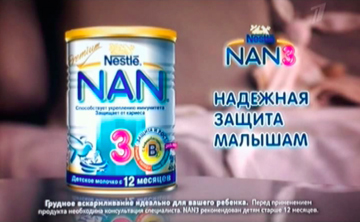
 Powdered formula is not sterile and may contain harmful pathogens, such as cronobacter sakazakii (previously known as enterobacter sakazakii) and salmonella. Although studies have found contamination levels as high as 14% of tins (research cited by the US Food and Drugs Administation), ill effects are very rare, but can included meningitis and death.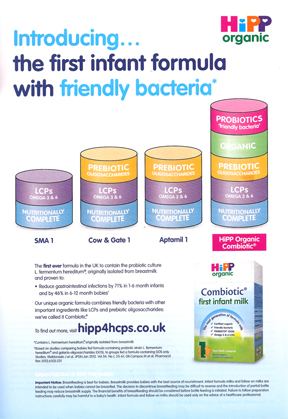


 .
.


 Or can you become a member of Baby Milk Action or buy something from our on-line Virtual Shop? See below for some of the great items available.

 Reusable Fairtrade cotton shopping bags available in Baby Milk Action's on-line Virtual Shop, along with books, postcards, t-shirts and much more.


